Most of the attention in Korea's shipbuilding value chain goes to the yards writing new orders. HD Hyundai Marine Solution sits somewhere else in the same chain: it makes its money after a ship is already built and already at sea.
Market cap is about 8.9 trillion KRW, listed on the KOSPI. In the shipbuilding value chain, it occupies the maintenance, repair and overhaul (MRO) node — a different demand cycle from the newbuild yards that dominate the headlines.
What the company actually does
The business traces back to 2016, when Hyundai Heavy Industries spun off its after-sales division into a separate company, Hyundai Global Service. From there it expanded into bunkering and digital-control businesses, and listed on the KOSPI in May 2024.
Four segments make up the core business:
- Ship parts supply
- Bunkering (marine fuel supply)
- Eco-friendly retrofit work on existing vessels
- Digital solutions for fleet operation
None of this depends on new ships being ordered. The revenue base is the maintenance demand from vessels already operating — a fleet that keeps needing service regardless of where the newbuild cycle stands.
The numbers
- Revenue growth, trailing four quarters: +12.10%
- Free cash flow (operating cash flow minus capex) as a share of market cap: +2.86%
- Average daily trading value: 28.86 billion KRW
For a business whose revenue isn't tied to the newbuild cycle, that's a reasonably steady growth rate.
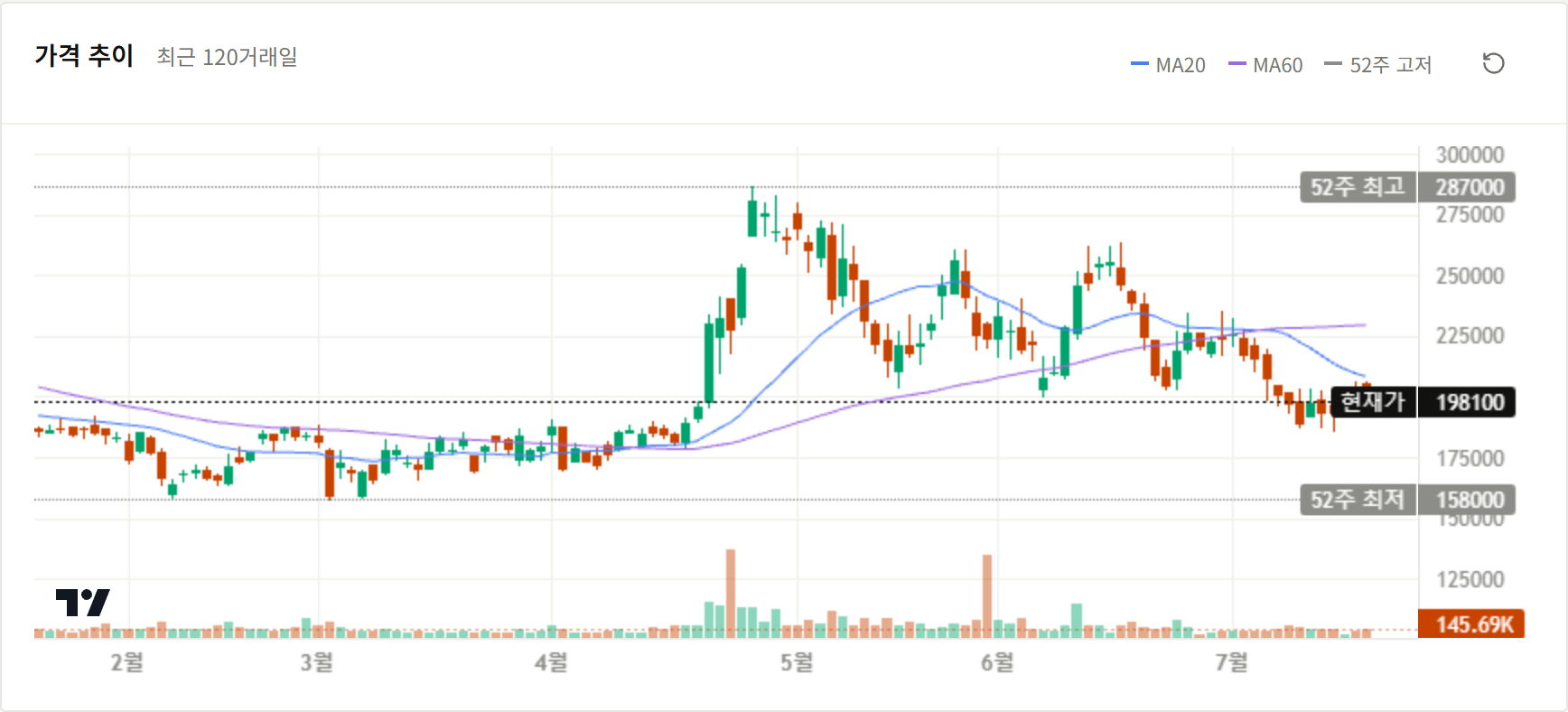
Diverging from the sector ETFs
Korea's shipbuilding and shipping ETFs — KODEX Eco-Friendly Shipbuilding & Shipping Active, HANARO Fn Shipbuilding & Shipping, TIGER Shipbuilding TOP10 — are all down more than 20% over the last 20 trading days. That's a sector-wide correction.
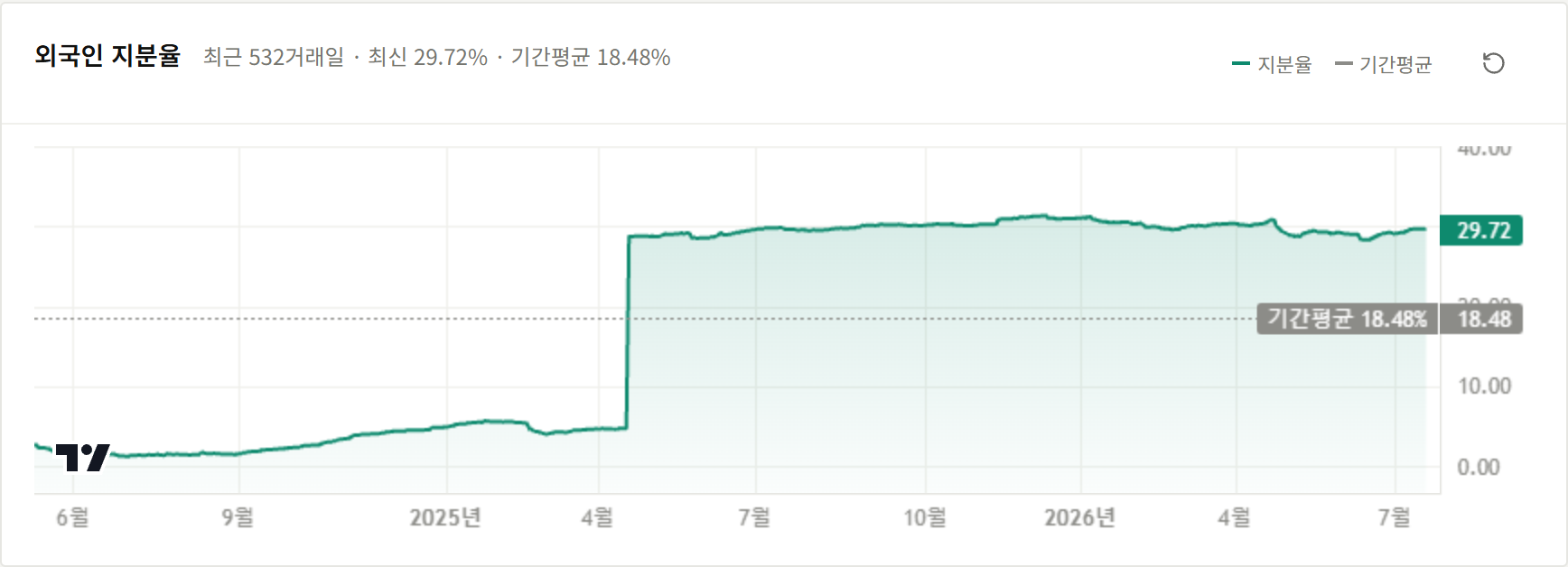
HD Hyundai Marine Solution doesn't track it as closely, because its revenue comes from managing an existing fleet rather than from newbuild order flow. Foreign ownership sits at 29.72%, above its 532-trading-day average of 18.48%.
Where the market disagrees
The signals aren't all pointing the same direction. National Pension Service (NPS) ownership fell from 7.23% in July 2025 to 6.22% in April 2026. At the same time, the median analyst target price across three brokerages is 412,000 KRW, against a current price of 198,100 KRW — a wide gap. The weekly moving averages haven't moved into bullish alignment yet.
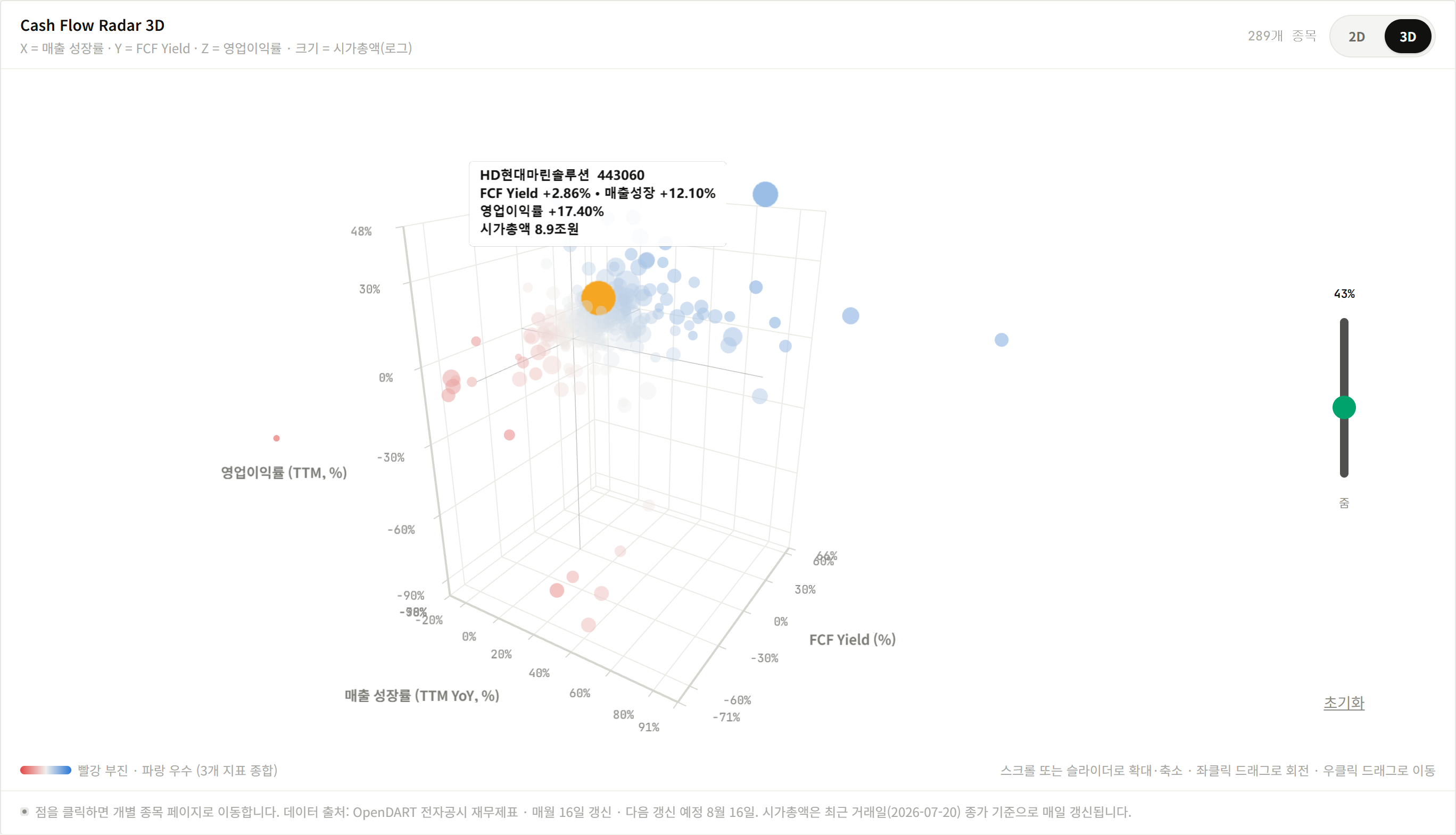
What's worth watching from here: whether the aftermarket revenue growth holds up, and whether that gap between target price and current price starts to close.
This is a data summary, not investment advice. Figures are sourced from public disclosures and exchange data at the time of writing and may have changed since. Do your own research before making any investment decision.
Originally tracked as part of K-Chain Radar's daily value-chain series — follow along on X (@KChainRadar).
Comments
Post a Comment